
</rupture>
Where confusion ends and hope begins.

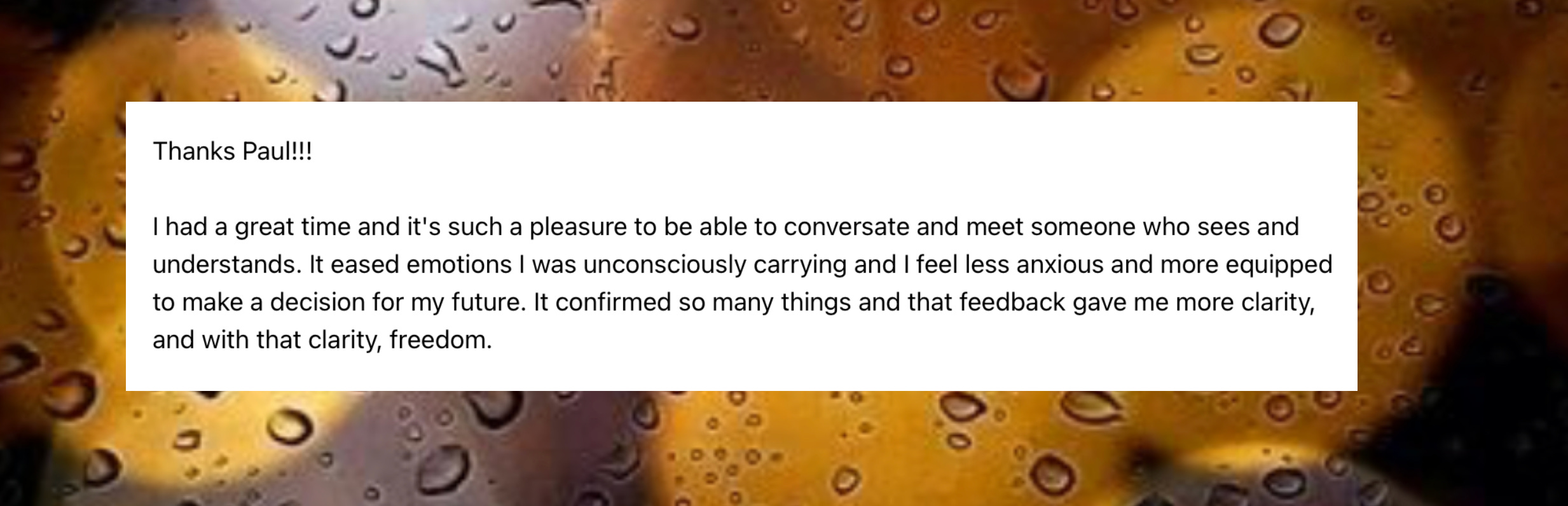
Using astrology and psychology, I help people in 1-on-1 sessions to break stagnant patterns so they can make successful transformations in times of change.
Apply to work with me here: Application
Questions? zeitvillemedia@protonmail.com

Y2K was the last big movie we watched together.
Sneak previews rolled out for months leading up to the premiere.
The plot was gripping: once the clock struck midnight in the year 2000, all the world would come crashing down.
Computers would erroneously interpret “00” as 1900, causing a breakdown in all sorts of automated systems.
Instead of a holy rapture, the new millennium would promise a rupture.
In order to prevent this rupture, hundreds of billions of dollars were spent updating critical infrastructure, from banking to transportation.
What a show.
And then time marched on.
It wasn’t until 2020 when we realized that the real glue holding us together wasn’t numbers.
It was that subtle drip of blockbuster movies that everyone watched in summer. It was the ability to get a Big Mac in any state. It was everyone having to press the home screen button on the original iPhone, in the same way, every time.
Humanity carries a deep need for a collective story. Continuity is king.
But something happened. Now our stories now are hyperlocal, micro tribal, cultish.
We’re built to commune and share meaning. Technology gives us the ability to do this across space and time at a greater scale, from the internet to the printing press.
So what are the consequences of sharing less in common despite it seeming like we’re more interconnected than ever?
In recent weeks, the collective has gone through something of an apocalyptic awakening. Emails related to the seedy underbelly of society have forced us to consider weaknesses in the infrastructure of our world—though arguably this time it’s our spiritual infrastructure.
Some people react with dark humor. Others react with disgust or fearful silence. And yet others lash out with righteous anger, crying to God for cosmic justice.
We have definitively reached the end of one form of society. But it didn’t come from a Y2K bug. The glitch came from some people being ahead of the curve, while others lacked access—or didn’t want to believe—certain pieces of crucial information.
Society as we once knew it has actually been dead for six years at this point. This is incredibly eerie and strange.
There was no grand countdown for the 2020 pandemic, like with Y2K. Afterwards, you could attempt to pretend that things would go back to normal.
The pandemic was weird but maybe they would just, you know, turn Society back on. Like a switch.
Why would large swaths of people deny that we crossed a point of no return in 2020?
Sometimes it’s easier to accept the apocalypse if you can measure it in real time.
With no definitive statement from government or media that the pandemic had collectively ended, it was like it never fully began.
This confusion was reinforced by the patchwork way in which various spaces treated our post-2020 world. Some spaces felt ruled by fear. Others had a festive vibe.
We’re living in an asymmetrical and de-sychronized world now.
There are cohorts looking at the emails saying “I told you so!” While others are having their entire worldview shattered. It’s like waking up and realizing everything is fake and has been fake for some time—propped up not by truth and meaning but by lies and illusion.
Non-linear states of existence make people feel schizo. If we can’t share this apocalyptic story in the same way with each other, then what do we have?
No one knows what day it is anymore. We latch onto Hallmark holidays with white knuckles, hoping it will stabilize our increasingly fragmented existence.
It’s so strange, each one of us has already been living in the future—some of us just haven’t realized it. Maybe some people were waiting for a collective neon sign to say “The future is now!”
How bizarre, that we’ve built our lives so deeply around the modern architecture of meaning—press conferences, PR campaigns, social media posts—that an ending never really registered in a definitive collective way until now.
The rush of events personally and globally is making it so that we can no longer ignore what is obvious.
We must get busy finding closure, so that hope can spring forth.
That’s what I’d like to unpack for you today. Let’s dive in.
Source Tags

The ability to have shared reference points may not seem like a big deal until it’s gone.
Once your supply chains of meaning have been disrupted, you really start to fiend for that most precious of resources—the collective Big Tent story, sweet as a superhero movie shared on a summer night together.
But what are people’s lives tagged to now? Where do their reference points derive from?
In an algorithmic universe, people are constructing their Big Tent worldviews from micro sources. These aren’t the days where grandparent, parent and child all know who Marilyn Monroe is. The inside baseball around Sydney Sweeney is, for example, a micro phenomenon by comparison.
It’s not bad to be entertained by passing gimmicks. What I mean is, if your worldview is constructed from micro reference points, and has no pretensions to being The State of the World—well, then no harm done.
But fragmentation occurs when people try to take these micro instances and use them as explanatory models for the world. “This is how men or women are.” “This is how Republicans or Democrats are.”
Many people still operate from pre-2020 epistemological models. This was a time when sources were vetted and debates could be had in a Public Square.
But logic has reached a turning point, as evidenced by the assassination of Charlie Kirk, which occurred during the previous eclipse cycle in the fall and has now been followed up by a release of disturbing emails.
We’re clearly not in the old timey state of “agreeing to disagree.” The events happening now represent a rupture within polite society.
But moving on from this rupture is essential, because stewing there will produce a sense of blocked anger instead of hope.
Here’s the astrological lowdown on what’s behind all this:
We have a powerful New Moon on February 17th. This is an Aquarius Solar Eclipse. We haven’t had an eclipse in this sign since February 2018.
Aquarius loves nothing more than to connect and create new combinations. It’s an innovative, future-oriented energy. It’s broadminded and able to accommodate many points of view.
The message is: create your own future or else the future will come for you.
This also kicks off the Year of the Horse, since it’s Chinese Lunar New Year. We will really feel the “1” energy of independence now (2026 adds up to 1 in numerology).
Then, to top it all off, we have Saturn and Neptune meeting at Zero Aries, the world beginning point (when the Sun hits this every year, it’s called the Spring Equinox or astrological new year’s day).
It’s this last data point that I’d like to focus on. Let’s keep going.
Fresh Frontiers

Saturn and Neptune last met at the time the Berlin Wall fell and the World Wide Web was invented.
Something was dissolved (Neptune’s power) and then a new structure (Saturn’s power) was deployed.
Now, it’s true that Saturn rules Capricorn, which relates to the structure of rules. But he also rules Aquarius, which is the structure of INTERCONNECTION.
Thus, Saturn is the technical ruler of this powerful Aquarius Eclipse.
And what is Saturn doing? Fusing with Neptune in the same historic way, although in a different flavor compared to the early 90s.
Why? Because they’re meeting in Aries now, a sign that’s about independent frontiersmen. Our old notions of novelty and originality and individual grit will be dissolved—then restructured.
In other words, our Berlin Wall moment, our Internet 1.0 moment, will probably look like people losing their minds because they don’t know who they are as an individual.
Old walls have come down. New structures are being built from the rubble.
People don’t know how to be individuals anymore because they’ve outsourced the work of identity formation to algorithmic chambers.
We’ll see more extreme behaviors as people have their ego challenged. Originality will be the dominant message of this time but some may overcompensate by viewing the body as an experiment.
It’s very “fresh start” kind of energy. Looking to what can be. The shape of things to come.
And it’s ripe with conflict.
As a result of losing collective models of meaning, many people are going to be more angry and mercenary. They may band together in the form of militias, factions and cults.
Meanwhile, sexuality will also hit an inflection point as this revolutionary frontier energy rushes in.
Monogamy’s position at the top of the relationship hierarchy will increasingly become a topic of debate. People may entertain more unique arrangements.
In sum, what happens when a rupture seals off and a new frontier opens up?
Movement.
Galloping in the Year of the Horse.
This is not a quiet or slow world. It’s equal parts creative and incoherent.
This is a time when understanding is strained and urgency takes over. Primal instinct.
Let’s wrap up with some final takeaways.
Force Restart
Typically when you’re looking at a New Moon in Aquarius, you want to grasp what’s going with Saturn, as we’ve just discussed.
But you also want to consider what’s going on with Uranus, the modern ruler.
We find Uranus at the tail end of Taurus, a sign he’s been in since 2018.
Taurus is the essentials of life: food, shelter, work, sex.
It’s also anything essential that you own. Your couch, your car, your bed.
The reason Uranus is considered a modern ruler of Aquarius is because he interconnects things, especially through technology—and we know Aquarius loves to discover new combinations.
Thus, we saw the app-ification of life essentials. Tinder. DoorDash. Uber.
We’ve over-prioritized convenience within our models of creation and production. But this is coming to an end as Uranus prepares to leave Taurus permanently in late April. You can feel people wanting more mystery in their life.
This Aquarius Eclipse is in a very tight square to Uranus. Squares produce tension and turning points. Uranus, already being the ruler of Aquarius, is none too pleased about this push.
He wants to wrap things up on his on time but he sees the writing on the wall. The future is coming in hot, and it won’t be about ordering sex, burritos or a ride to the airport through an app.

So this eclipse may push infrastructure to the breaking point. Especially with Mercury preparing to go retrograde on February 26, I would not be surprised to see glitches, outages and other sorts of systemic snafus.
But again, in a spiritual sense, the snafus we could see are likely to be disconnecting from old models and plugging into new ones.
Social media will change, since it no longer represents the place where a collective conversation is occurring. The experience there is more jagged now, reflective of our non-linear modes of being.
This could be good, because it’s reminiscent of the more spontaneous experience of the early pre-social media web. And yet, the algorithmic genie is out of the box, so there will be growing pains as we trend towards a more adventurous patchwork internet.
Slop will continue to pour everywhere, for example. There’s also the issue of The Glasslands, which I’ve developed as a concept in contrast to the Patchwork Age.
The Glasslands are represented by the conglomeration efforts of media entities.
There’s nothing exceptionally novel being produced by these streaming monoliths. There are sequels, spin offs, AI iterations and greatest hit re-runs.
It’s like a beautiful glass highway, racing into the distance towards a crystalline city. Cold utopia.
In this smooth frictionless world, where things move lightning quick, mystery is replaced by infinite jest. The medium is the message here. Instead of consuming content to get your creative gears turning, the pleasure of convenience itself takes center stage.
Nothing of consequence or invention happens here because it’s all frictionless.
And yet, the purpose of today’s newsletter is to alert you that friction is coming for many, whether they want it or not.
Life is getting buffered.
As more people realize that old supply chains of meaning aren’t coming back, we will see a rebellious current race through society. Sometimes, the rebellion could lead to positive change and reform. Other times, it could be very destructive.
If you feel that your life is at a turning point, this is why.
Old forms are breaking away so that a new self can take shape. Smarter. Tougher.
An old rupture is closing and a whole new frontier is opening up.
It’s actually been here all along. Now more people than ever are ready to take advantage of it. The spirit of revolution is here.
As Victor Hugo once said: “There is nothing more powerful than an idea whose time has come.”
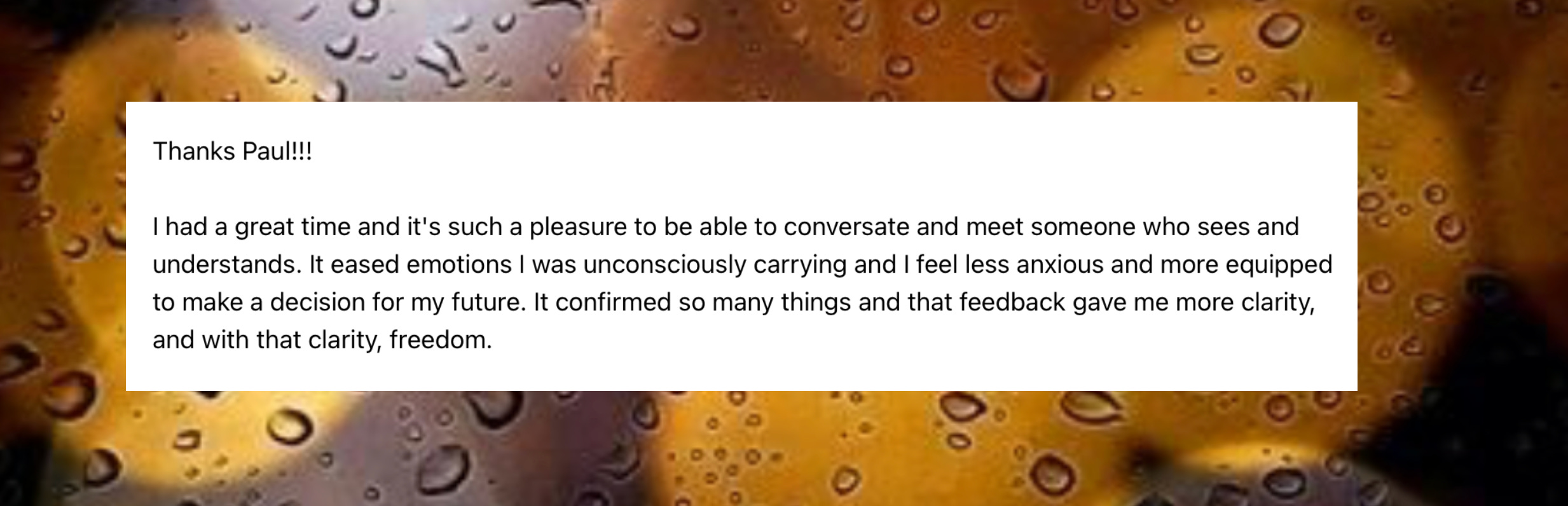
Using astrology and psychology, I help people in 1-on-1 sessions to break stagnant patterns so they can make successful transformations in times of change.
Apply to work with me here: Application
Questions? zeitvillemedia@protonmail.com